
Newsletter – 8th January 2026
Under £100 for Findmypast Everything subscriptions! ENDS SUNDAY 11TH
What makes Findmypast different – and why does it matter?
Annual Competition: thousands of prizes to be won FREE TO ENTER
Late Christmas gift: 30-day free trial to TheGenealogist’s top Diamond subscription!
The LostCousins newsletter is usually published 2 or 3 times a month. To access the previous issue (dated 26th December) click here; to find earlier articles use the customised Google search between this paragraph and the next (it searches ALL of the newsletters since February 2009, so you don't need to keep copies):
To go to the main LostCousins website click the logo at the top of this newsletter. If you're not already a member, do join - it's FREE, and you'll get an email to alert you whenever there's a new edition of this newsletter available!
In the 1950s, Peter and his family used to visit a piece of land near Laindon, Essex, which had a shed on wheels – or so it appeared to a young boy. They had picnics and enjoyed themselves in the simple ways that people did before and after the War. Around 1960, the family lost access to the land. Peter was told that it was to do with compulsory purchase and redevelopment.
But how was an East End family able to afford a place in the country? Humble though it was, for the best part of 70 years this remained a puzzle. Nobody in the family seemed to know, and then at Christmas 2025 Peter’s brother bought his sister-in-law Sian a book which described the Plotlands of Essex, including Laindon. Small plots of land sold for as little as £5, putting them within the reach of many.
Andy Calver writes:
My older brother Peter is the genealogist in the family while my career in museums has tended to make me interested in history. But while reading a book https://amzn.to/49trw1N about my home county – Essex I was sent down a family history rabbit hole.
When I was much younger, we often drove to see relatives in Southend and passed signs for a place called ‘Laindon’ and I recall my parents mentioning that they used to go there before I was born. My brother recalls going to a ‘hut’ in Laindon in the 1950’s and my sister has mentioned driving through Laindon and my mother pointing out some trees she said my maternal Grandfather had planted. The book I mentioned had a section on ‘plotlands’ and mentioned Laindon as one of the locations where people from the East End of London bought plots of land to build their own rural idylls and this reminding me of the family tales of Laindon.
In the early decades of the 20th century, the area around Laindon in Essex underwent a transformation that reflected wider social changes in Britain. Around parts of what is now Basildon and neighbouring villages such as Dunton and Langdon Hills, the Plotlands were parcels of rural farmland sold cheaply to people—mainly from London’s East End—who wanted a break from the urban life. https://www.laindonhistory.org.uk/content/areas_and_places/dunton/the-haven-and-plotlands
In the early 1900’s the price of grain dropped due to cheap imports and farm land lost value. With the arrival of the railway to Southend, landowners and developers saw an opportunity to divide up neglected land and sell it to city dwellers at a profit. These ‘plots’ were only £5 or £6 each and although this was often several weeks wages at the time, it made land ownership possible for many poorer citizens of London. The plots were originally intended for holiday homes and were aggressively marketed, often with the offer of free train tickets and champagne alongside the promise of idyllic rural life.
Purchasers bought materials from London or purchased them locally and built these holiday homes and weekend retreats themselves – others used repurposed railway carriages or trams; my brother thinks that our Grandad used an old wooden caravan.
During the Second World War many plotlanders chose to live on their plots to escape the London bombing and by the 1940s there were thriving communities with thousands living in these makeshift homes, albeit often without gas, running water and electricity.
In the late 1950s my brother recalls that the family stopped visiting Laindon and this coincides with the proposed expansion of Basildon as a New Town in the 1960s. Most of the land was compulsory purchased for the development although much of Laindon and adjacent Langdon and Dunton Plotlands were not developed and some of the houses were occupied into the 1980s. Now the area is protected as Langdon Nature Reserve and there is a plotland bungalow ‘The Have’ that has been preserved as a museum run by the Essex Wildlife Trust https://www.essexwt.org.uk/nature-reserves/langdon/haven . Sadly this is currently closed for redevelopment, but I look forward to visiting it the future.
Under £100 for Findmypast Everything subscriptions! ENDS SUNDAY 11TH
Which subscription site is the best? Ultimately it all comes down to where your ancestors lived and what period you are researching. For me, with ancestors from 10 English counties (plus London, Ireland and Germany), and multiple ‘brick walls’ in the 1600s and 1700s there is no one site that meets all of my needs – and I’m willing to bet that it’s the same for most people reading this newsletter.
But with 12-month subscriptions costing around £200 a year it can be tough to find the money for more than one – so when a half-price offer comes along it’s hard to resist, especially when the offer is EXCLUSIVE to readers of this newsletter. Under this offer for NEW subscribers you pay just £99.99 at the UK site, or half-price at Findmypast’s other sites. If you are a lapsed subscriber you may also qualify, depending how long ago it was. The offer is NOT FOR EXISTING subscribers.
(You can share a link to this newsletter with friends and family – but if they’re serious about family history, why not suggest that they join LostCousins so they can get their own newsletters in future?)
Tried Findmypast before? Ten years ago Findmypast didn’t have half the records that they do now. I’m not just talking obvious things like the 1921 Census – even the 1939 Register wasn’t released until November 2015 (and it wasn’t included in subscriptions until the following year).
In 2015 Findmypast had yet to announce their ground-breaking partnership with the Roman Catholic Church, which has subsequently led to tens of millions of records going online for the first time – including the baptism of my great-great grandmother, whose birth wasn’t registered when she was born in 1840. That record was key to knocking down a ‘brick wall’ that had been blocking my way for almost two decades and, whilst DNA also played a part, both were essential to the solution. I used DNA too – an example of combining different approaches to solve a long-held problem.
There’s another reason why finding births is a lot easier than it used to be. In 2016 the GRO added a new birth index to their website, one that includes the mother’s maiden name as far as back as 1837 – the original indexes didn’t have this information until after 1911. It greatly reduces the chance of ordering the wrong birth entry, but sadly the GRO’s search is very limited in its capabilities – identifying all the children born to a particular couple can require 10 or more different searches.
Only Findmypast have added maiden names to most entries in their index of 58 million births from 1837-1911; as a Findmypast subscriber you’re no longer constrained by the unnecessarily strict limitations of the GRO’s own search.
These are just examples that I’ve chosen to emphasise how much has been added and improved. Which brings me to newspapers…..
In 2015 the British Newspaper Archive had a mere 10 million pages – now there are almost 100 million. All of these pages, with billions of names, are available through the Findmypast website and, thanks to a complete re-engineering of the search, it’s far easier to find what you’re looking for than it would have been 10 years ago.
Although this offer is exclusive to LostCousins, you won’t be supporting my work unless your purchase is tracked as coming from the LostCousins site – and that very much depends on which browser you use, what the browser settings are, and whether you have any software installed that has ‘privacy’ features. This could be an adblocking extension in your browser, your Internet security software, or a VPN. To maximise the chances of supporting LostCousins I recommend using the Chrome browser – if you haven’t used it before, the default settings are just fine.
Please ensure you use the correct link below when you make your purchase: if you start on one Findmypast site and end up on a different one the connection to LostCousins might be broken.
All Findmypast sites have the same records, and you can use whichever of their sites you prefer – even if you bought your subscription through a different site. Sadly the discount only applies for the first year.
This incredible offer can’t last for ever – the date I’ve been given is 11th January 2026 – so make your mind up NOW!
What makes Findmypast different – and why does it matter?
One of the biggest mistakes that any family historian can make is to assume that all of the major genealogy websites have the same records, and that the same search techniques work equally well at every site.
Even highly-experienced researchers – as most LostCousins members are – often fail to appreciate that they can get better results by adapting their search technique. For example, when you’re filling out a Search form, do you enter as much information as possible, or as little as necessary? The first technique can work well at FamilySearch and Ancestry, where it often produces lots of results (though most of them won’t be relevant) – but at Findmypast you’ll generally get much better results if you enter less information (it also saves time!).
One of the things I like most about Findmypast is the way that they handle forename variants. You don’t need to tick the ‘include name variants’ box to allow for middle names and initials: for example, a search for ‘Marie’ will find ‘Marie-Claire’, ‘Marie Ann’ and ‘Marie J’. Similarly, a search for ‘Mary’ will find ‘Mary Ann’ (though not ‘Maryann’ or ‘Marianne’). When you do tick the ‘include name variants’ box you’ll get every result that might feasibly fit, including records where only initials are shown.
I also like being able to re-order the Search results by clicking the heading at the top of any column. I find this particularly useful when I’m looking for baptisms as I can sort them by date, by location, or by the forename of the father or mother.
But it’s not just about how you fill out the Search form and sort the results – there’s also the question of what records you’re searching, and how the records are organised. Ancestry typically organise records according to their source – so if parish registers for a single county are split between two or more record offices you might have to carry out multiple searches to find the records you’re looking for (assuming you realise what has happened).
By contrast, Findmypast bring together all the records they have for a particular county, so you don’t necessarily need to know which record office holds the registers. Sometimes there might be three or four results for the same baptism, all from different sources: this might seem like unnecessary duplication, but it greatly reduces the chance that you’ll miss an entry because it has been wrongly transcribed.
Similarly you can search marriages for a county without having to worry whether they took place before or after 1754, when new registers were introduced. To carry out the same search at Ancestry is much more complicated – especially since marriages between 1754 and 1812 won’t all be in the same record set (and what works for one parish might not work for another parish in the same county).
Finally, it’s worth mentioning that Findmypast have a large collection of transcribed parish records thanks to their excellent relationships with family history societies. You don’t need me to tell you that volunteers from family history societies are by far the best transcribers, thanks to their local knowledge and their diligence – this means that even if the parish register images are at Ancestry, you might find the entry you’re looking for more easily by starting at Findmypast.
Annual Competition: thousands of prizes to be won FREE TO ENTER
Last year I had the pleasure of awarding almost 4000 prizes to LostCousins members who took part in my Annual Competition – and I’m hoping to give away thousands more over the next few weeks (this year’s competition ends on 31st January 2026). As usual here are some fantastic prizes donated by big genealogy companies, but it’s not just about monetary value of the prizes.
But first of all, let me say A BIG THANK YOU to everyone who has generously donated a prize for this year’s competition – without you it wouldn’t be so special.
More prizes will be announced as the competition progresses – watch this space!
STAR PRIZE – 12 MONTH EVERYTHING SUBSCRIPTION TO FINDMYPAST WORTH £169.99
With an Everything subscription the world is your oyster – you can log into any of Findmypast’s sites worldwide and access ANY of the billions of records and historical newspaper articles in their collection. Though Findmypast are best-known for their British records, thanks to their close relationships with The National Archives and the British Library, they have a massive collections of Irish and Australian records, and unique access to Catholic records.
You might think, I don’t have any Irish, Australian, or Catholic ancestors – well, that’s what I used to think. But thanks to Findmypast’s Catholic baptism records (and some clues from my DNA matches at other sites) I was able to break down one of my oldest ‘brick walls’, proving that my great-great grandmother was of Irish Catholic stock, even though she married in the parish church and all of her children were baptised in the Church of England. In the process I also discovered an Australian branch that I’d previously known nothing about.
STAR PRIZE – 12 MONTH DIAMOND SUBSCRIPTION TO THEGENEALOGIST WORTH £169.95
If you’re looking for records that the other big sites have missed, mis-transcribed, or ignored, TheGenealogist is a great choice: they have the most complete collection of tithe records and tithe maps that you’ll find anywhere online, and many of the tithe maps are in colour, which makes them easier to interpret. Map Explorer now includes all of the England & Wales censuses from 1841-1911, as well as the 1939 Register, tithe maps, and the 1910 Land Valuation – which is exclusive to The Genealogist (the coverage is fast-expanding, but is currently focused mainly on London and the south).
Looking for someone with an unusual occupation who is proving elusive in the censuses? The keyword search at The Genealogist is one that I’ve used time and time again.
SPECIAL PRIZE – ANCESTRY DNA TEST (UK ONLY)
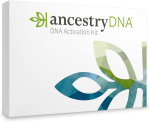 If
you’ve yet to take a DNA test, or tested with a different company – as I did
back in 2012, long before Ancestry began selling their test in the UK – this is
a chance to discover just how much difference it can make. Whether your aim is
to knock down ‘brick walls’, or simply to verify your records-based
research using evidence that cannot be falsified, you will be amazed by the
results – provided, of course, you follow the advice in my DNA
Masterclass.
If
you’ve yet to take a DNA test, or tested with a different company – as I did
back in 2012, long before Ancestry began selling their test in the UK – this is
a chance to discover just how much difference it can make. Whether your aim is
to knock down ‘brick walls’, or simply to verify your records-based
research using evidence that cannot be falsified, you will be amazed by the
results – provided, of course, you follow the advice in my DNA
Masterclass.
Or perhaps you’ve taken the test yourself, but would like to enlist the help of one of your cousins. With DNA the real challenge is figuring out which of your matches share each of your ‘brick walls’, and comparing your matches with those of a cousin who shares a particular ‘brick wall’ helps enormously. But don’t make it a close cousin as they share too many of your ancestral lines – 3rd and 4th cousins are ideal (and they’re the cousins you’re most likely to find through LostCousins).
Note: If you live outside the UK please nominate a cousin in the UK – should you be lucky enough to win.
EXCLUSIVE ZOOM PRESENTATIONS
NICK SERPELL – SOLVING THE JIGSAW OF FAMILY HISTORY
Professional genealogist and former BBC journalist Nick Serpell explains why we need to employ lateral thinking when we hit a brick wall in our research.
For more than ten years Nick worked as the BBC's Obituary Editor, delving into the lives of some of the most famous people on the planet, and telling their stories. In his long career as a BBC journalist, he was always aware of the importance of rigorous research and careful checking of sources.
 PROFESSOR
REBECCA PROBERT – FASCINATING BIGAMY CASE STUDIES
PROFESSOR
REBECCA PROBERT – FASCINATING BIGAMY CASE STUDIES
A great supporter of LostCousins, and the closest thing to a superstar in the academic world, Professor Probert first came to my notice when she published Marriage Law for Genealogists a book that should be on the bookshelves of ever serious family historian (you can read my review here). Her next book will be on the subject of bigamy, so I’m delighted that she has agreed to recount some of the most fascinating cases in advance of publication.
If you’ve added relatives to your My Ancestors page since midnight on 31st January 2025, when the last competition ended, the chances are that you’ve already entered this year’s competition – every direct ancestor or blood relative added counts as an entry, and you’ll get double credit for relatives from the 1881 Census (because that‘s the census most likely to connect you to your ‘lost cousins’, so by using that census you’re doing them a favour).
Your My Summary page shows how many entries you have in the competition so far – it’s shown in red so you can’t miss it.
Of
course, I’m hoping that now you’ve seen some of the prizes on offer this year
you’ll be encouraged to enter even more relatives between now and the close of
the competition at midnight on 31st January 2025. Not because I’m
interested in your data – it’s of no value to me – but because I need that
information to identify the other members who are your ‘lost cousins’. The more
relatives you enter, especially from the 1881 Censuses, the more cousins you’ll
find.
Why would you want to find your ‘lost cousins’? Because you don’t have time to research all of your ancestors on your own – nobody does.
Perhaps the worst thing about researching on your own is that you are likely to be duplicating research that one of your cousins has already carried out already done – and if you’re short of time, you don’t want to waste it, do you?
The point I’m trying to make is that whilst it might take you a couple of hours to enter all of your relatives from 1881, it’s going to save you far more time in the future.
It’s all my fault… when I was designing the LostCousins site in late 2003 I wanted the pages to have short snappy names that are easy to remember, like My Cousins and My Ancestors. Unfortunately, the name My Ancestors can be misleading because some members infer that they can only enter their direct ancestors (the people they are directly descended from). It’s too late to change the name now, but what I can do is reprint this advice from one of my January newsletters:
Tip: ALL of your living cousins are descended from collateral lines, the lines that branch off from your direct lines, so the best way to find them is to enter the relatives from the branches. Start with your ancestors' siblings then continue with their cousins. A good approach is to start with everyone you know about in 1841 – whether or not you can find them on that census – then track each branch and twig through the censuses until you get to 1881.
Here’s one reason why entering only your direct ancestors won’t work: if you’re of my generation then most of the direct ancestors recorded in 1881 will be your grandparents or great-grandparents. Their descendants are your 1st and 2nd cousins, which means they’re so closely-related that it’s unlikely that you could both have been researching for years without either of you realising that the other shared your passion for family history.
By contrast, if you enter your direct ancestors’ 1st cousins, their descendants are your 3rd and 4th cousins – close enough that they share a good chunk of your tree, but sufficiently distant that you wouldn’t necessarily know that they’re also researching their ancestors.
Of course, everyone’s tree is different, but the same principle applies – the further you cast the net, the more ‘lost cousins’ you’ll find.
There’s only thing worse than not winning a prize, and that’s winning a prize that you didn’t want. So this year we’ll once again be using the My Prizes page at the LostCousins site to allow you to tell me which prizes you’d most like to win – it’ll be active soon.
Here’s how it will work – you give each prize that interests you a rating, which can be anything from 1 (not very interested) to 10 (very interested indeed). Remember, these are ratings, not rankings, so you can give more than one prize the same rating. There’s no need to do anything for prizes that don’t interest you at all.
There’s also a space for comments. Often I’ll ask members who are invited to a presentation to submit questions in advance using the Comments box, but you’re welcome to leave other comments.
Presentations are not yet listed, as dates are still to be agreed.
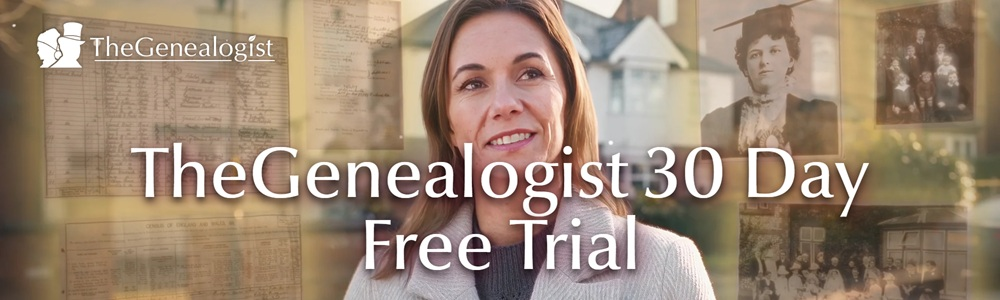
Late Christmas gift: 30-day free trial to TheGenealogist’s top Diamond subscription!
You’ve a full month to explore the "brick wall" busting tools, including Map Explorer (for pinpointing exactly where ancestors lived) and their unique Keyword, Family Forename, SmartSearch and Address search features. A month to discover less well-known resources that you won’t find a other sites.
Activate your offer now using this exclusive link.
This is where any major updates and corrections will be highlighted - if you think you've spotted an error first reload the newsletter (press Ctrl-F5) then check again before writing to me, in case someone else has beaten you to it......

Peter Calver
Founder, LostCousins
© Copyright 2026 Peter Calver
Please do NOT copy or republish any part of this newsletter without permission - which is only granted in the most exceptional circumstances. However, you MAY link to this newsletter or any article in it without asking for permission - though why not invite other family historians to join LostCousins instead, since standard membership (which includes the newsletter), is FREE?
Many of the links in this newsletter and elsewhere on the website are affiliate links – if you make a purchase after clicking a link you may be supporting LostCousins (though this depends on your choice of browser, the settings in your browser, and any browser extensions that are installed). Proud to be an Amazon Associate and an eBay Ambassador.